
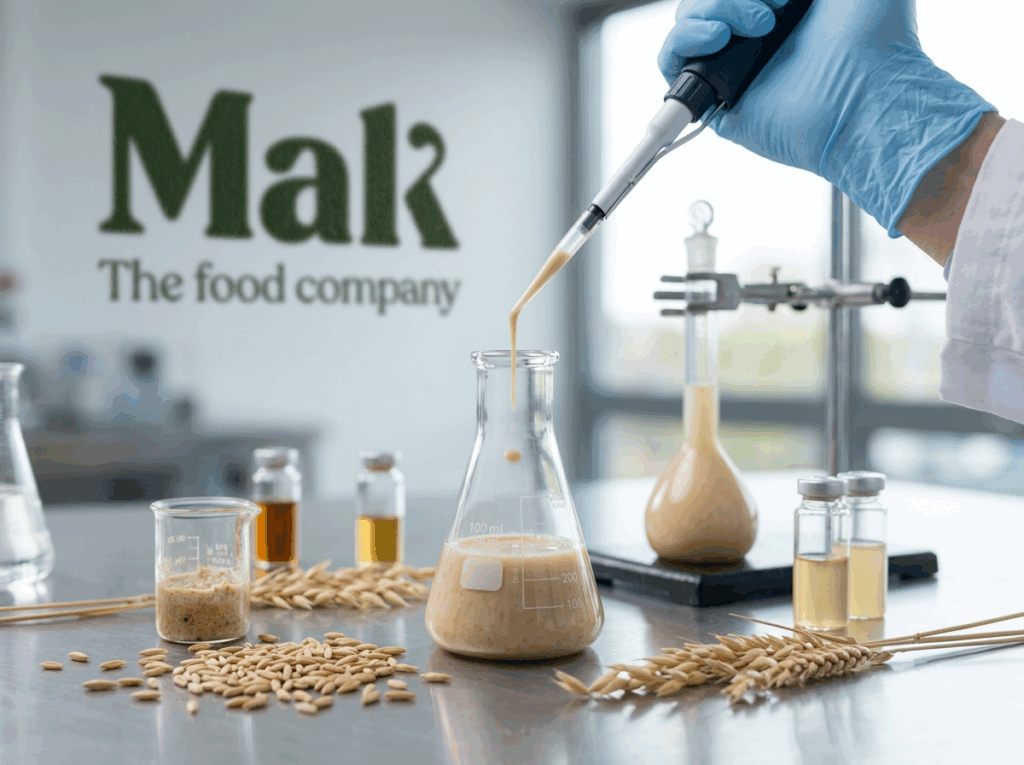
Plant based milk concentrate is transforming the dairy alternative industry by enabling manufacturers to create products that truly perform like milk in taste, texture, and functionality. Unlike traditional plant-based beverages, advanced oat concentrate solutions allow scalable production, improved sustainability, and consistent formulation performance across applications such as coffee, ready-to-drink beverages, and food manufacturing. As demand shifts from simple plant-based alternatives to high-performance dairy-like experiences, ingredient innovation and concentration technology are becoming key competitive advantages for global B2B producers.
The plant-based market is no longer in its early growth phase. It has entered a stage of industrial consolidation.
The oat concentrate segment, a core enabler of plant-based dairy alternatives, is projected to exceed USD 300 million by 2035, driven by innovation, sustainability, and global demand.
But the real shift is not about volume. It’s about expectations.
- The market no longer wants plant-based alternatives.
- It demands products that perform exactly like milk.
From plant-based to “like milk”: the new product development standard
Plant-based drinks remain the most established category within dairy alternatives, but the innovation focus has evolved significantly.
Today, consumers expect:
- Authentic dairy-like taste profiles
- Creamy and stable texture
- Reliable performance in coffee and culinary applications
- Consistency across ready-to-drink formats
And all of this must be delivered within efficient industrial frameworks.
This is redefining product development: it is no longer about creating plant-based beverages, but about engineering “like milk” systems.
The real value lies in the concentrate, not the final product
In a B2B environment, competitive advantage is shifting upstream.
Oat concentrates are becoming the core strategic ingredient, enabling manufacturers to:
- Standardize quality at scale
- Simplify formulation processes
- Reduce logistics and operational costs
- Adapt product profiles (skim, whole, high protein…)
With typical dilution ratios of 1:8 to 1:12, concentrates provide unmatched efficiency and flexibility in industrial production.
MAK: leading the next generation of oat concentrate solutions
In a market with over 50 identified global B2B manufacturers, only a limited number operate at the highest level of specialization.
MAK is one of them.
According to industry analysis, MAK is positioned as:
- A specialist in ultra-sustainable plant-based concentrates
- With proprietary concentration technology
- And a vertically integrated model optimizing the entire value chain
But MAK’s differentiation goes beyond positioning.
It is redefining how plant-based products are produced and scaled.
Tailored oat solutions for every market level
Oat Basic: the industrial foundation
Designed for manufacturers seeking:
- Stability
- Consistency
- Scalability
Oat Basic is a clean label without added sugars highly efficient solution adaptable to multiple applications such as oat drinks, yoghurts, nutritional shots, among others.
The foundation for any plant-based portfolio.
Oat Icon: delivering true “like milk” performance
The next level is not functional, it is experiential.
Oat Icon includes coffee, cocoa and almond flavour and is engineered to replicate:
- Dairy-like mouthfeel
- Enhanced creaminess
- Optimal performance in coffee and hot applications
Built for brands competing on experience, not just formulation.
Oat & Nuts: premium differentiation
The market is moving toward more complex, value-added offerings.
Oat & Nuts solutions like pistachio, hazelnut and peanut enables:
- Richer sensory profiles
- Premium positioning
- Stronger product differentiation
Not just plant-based, but brand-driven innovation.
Radical efficiency: the 10:1 model
MAK introduces a structural shift in how plant-based beverages are manufactured:
- 1L concentrate = up to 10L final beverage
- -90% water transported
- -75% logistics volume
- -90% packaging
- No cold chain required
This is not just product innovation.
It is system innovation.
And in a market where sustainability is becoming a critical decision driver, this represents a direct competitive advantage.
Competitive advantage is no longer the ingredient; it’s the system
The industry outlook is clear:
- Sustainability is a critical differentiator
- Format innovation is accelerating
- Logistics efficiency will define future leaders
In this context, the companies that will lead are not those offering standalone ingredients.
They are those delivering:
- complete solutions
- industrial efficiency
- global scalability
The future of plant-based is already defined
The question is no longer whether plant-based will grow.
The question is who will lead the transformation.
In the new generation of “like milk” solutions, leadership is built on three pillars:
- Technology
- Sustainability
- Industrial capability
Future industry leaders will not compete only on ingredient supply.
They will compete on delivering integrated solutions that enable scalable production and consistent product quality.